
Top 5 Programming Languages to Learn in 2026 for Quick Career Growth
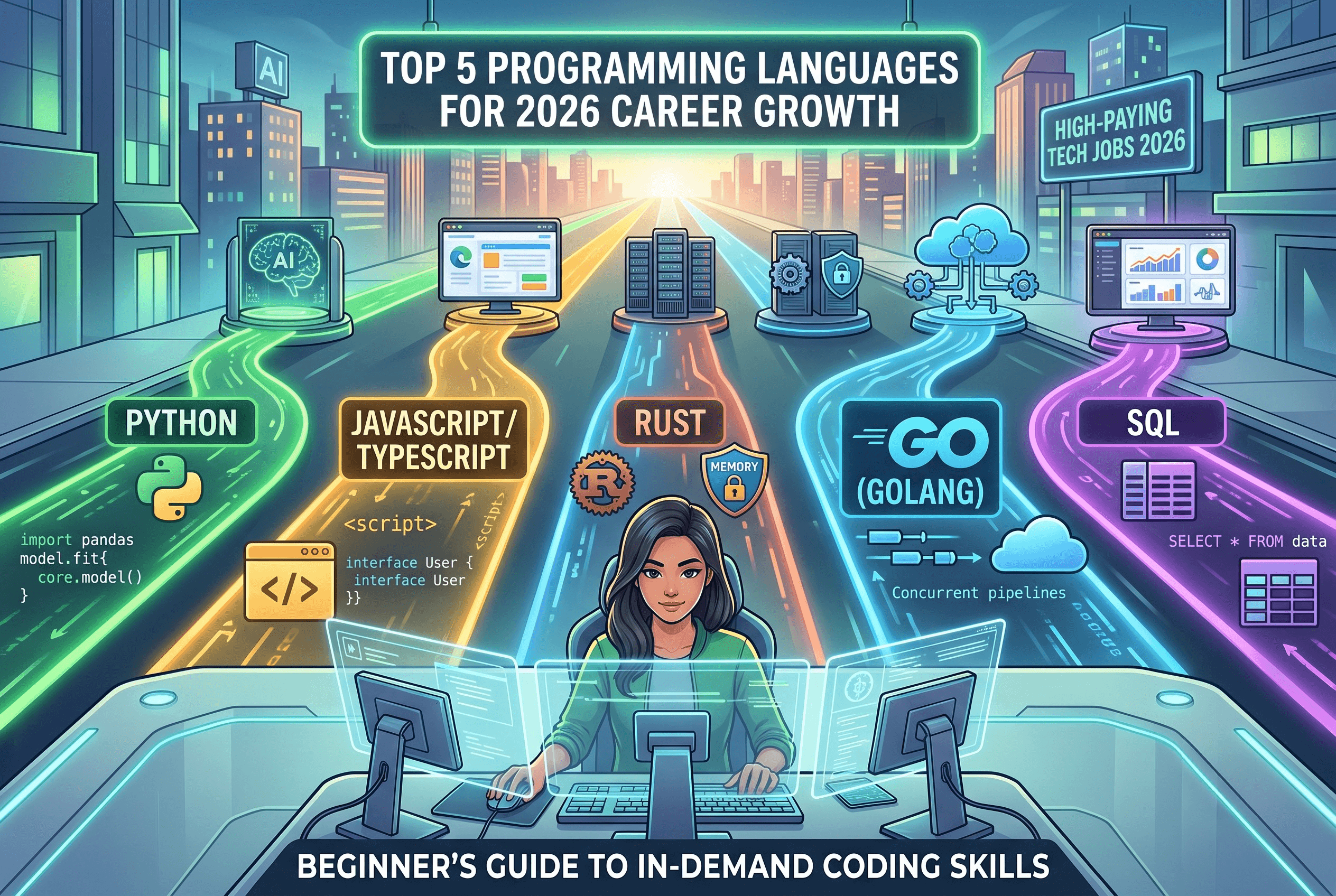
Breaking into the tech industry or pivoting to a higher-paying role requires a strategic choice. The software landscape is highly competitive, and deciding which language to master is the critical first step toward building a successful tech career.
Whether you are building your first web application, automating data workflows, or aiming for a software engineering role at a major tech firm, learning the right programming language is your fastest route to success.
This comprehensive guide breaks down the top 5 programming languages to learn in 2026 has to offer, perfectly suited for beginners aiming for rapid career growth.
Beginner’s Guide to Coding with MESD
1. Quick Comparison Matrix: 2026’s Best Coding Languages
| Programming Language | Primary Tech Domain | Beginner Friendliness | Career Growth Potential |
| Python | AI, Data Science, Automation | Extremely High | High |
| JavaScript / TypeScript | Full-Stack Web Development | High | High |
| Rust | Systems Programming, Security | Moderate | Very High |
| Go (Golang) | Cloud Computing, Microservices | Moderate | Very High |
| SQL | Database Management, Analytics | Extremely High | Essential Skill |
2. Python: The AI and Automation Leader
Python remains an absolute powerhouse for newcomers and veterans alike. In February 2026, Python led the TIOBE Index with a 21.81% market share, making it the most popular programming language overall. Its clean, readable syntax mimics plain English, drastically reducing the initial learning curve.
- Key Use Cases: Artificial intelligence, machine learning, data analysis, and backend automation.
- Why it Matters in 2026: We are operating in an AI-driven economy. Python is the default language of the AI era, sitting at the center of almost every data-intensive workflow and machine learning model.
- Career Outlook: With widespread demand, Python provides one of the fastest paths to a job, especially in data science and backend software engineering.
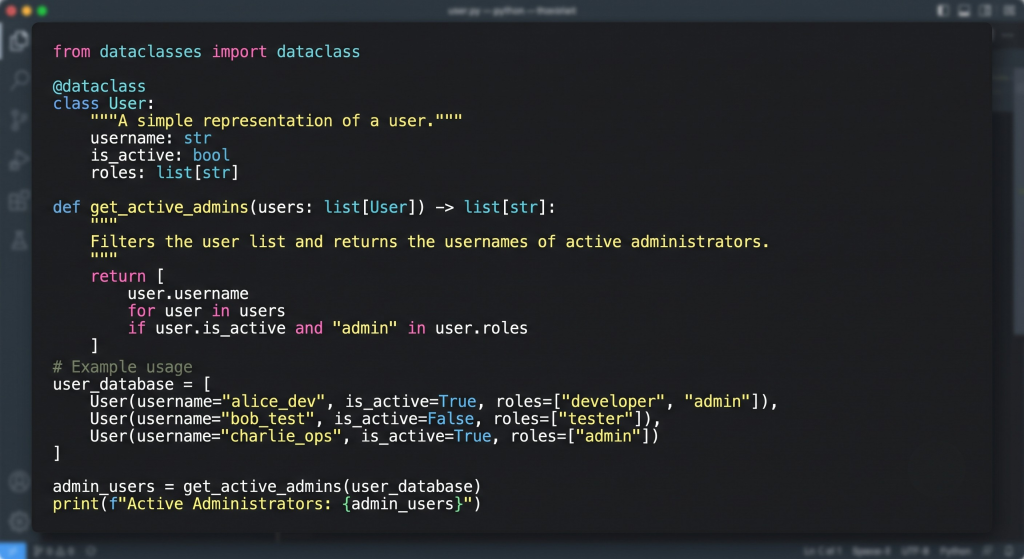
3. JavaScript & TypeScript: The Web Development Standard
You cannot browse the internet without interacting with JavaScript. It dominates web development, with approximately 66% of developers reporting its use in 2025 and 2026.
- Key Use Cases: Frontend user interfaces, interactive web applications, and backend servers.
- Why it Matters in 2026: While JavaScript remains the universal web standard, TypeScript has become the mature default for serious, large-scale codebases. In fact, TypeScript is now ranked #1 on GitHub by repository count.
- Career Outlook: Fluency in JavaScript and its strict superset, TypeScript, makes you a highly versatile Full-Stack Developer. Combined, they cover virtually every web development role available today.
TypeScript Official Documentation
4. Rust: The Champion of Performance
Rust has rapidly transitioned from a niche favorite to a critical enterprise tool. It is famously loved by developers, with surveys showing up to 84% of developers who use Rust want to continue using it.
- Key Use Cases: Operating systems, high-performance applications, and secure backend services.
- Why it Matters in 2026: Rust guarantees memory safety, proactively preventing the crashes and security vulnerabilities common in older system languages.
- Career Outlook: Because Rust requires a slightly deeper understanding of computer science concepts, the talent pool is much smaller. Developers who master it command a high salary premium, with some industry reports noting a 24% pay premium for Rust skills.
5. Go (Golang): The Cloud Infrastructure Powerhouse
Engineered by Google, Go (or Golang) is built to handle massive, concurrent operations efficiently without sacrificing speed.
- Key Use Cases: Cloud infrastructure, microservices, and high-speed network routing.
- Why it Matters in 2026: Modern digital architecture relies heavily on cloud computing. Go is the fastest-growing option for building cloud infrastructure and microservices. Essential industry tools like Docker and Kubernetes are written entirely in Go.
- Career Outlook: Demand for cloud engineers and backend developers skilled in Go is surging. About 16.4% of developers currently use Go, and strong enterprise demand continues to outpace the talent supply.
6. SQL: The Essential Data Communicator
Structured Query Language (SQL) is specifically a database query language, but it is an absolutely mandatory skill for modern developers. Over 58% of developers use SQL regularly because databases are the foundation of modern tech.
- Key Use Cases: Storing, managing, and retrieving data from relational databases.
- Why it Matters in 2026: Every digital platform runs on data. Whether you are analyzing user behavior or managing product inventory, you must be able to securely communicate with a database.
- Career Outlook: Pairing SQL with Python, Go, or JavaScript makes you an incredibly well-rounded candidate, instantly boosting your resume’s visibility to hiring managers.
7. Frequently Asked Questions (FAQ)
What is the easiest programming language for a beginner to learn?
Python is widely considered the easiest programming language for beginners due to its straightforward, highly readable syntax and vast learning resources.
Which programming language pays the highest?
Languages that require specialized systems-level knowledge, such as Rust, often yield the highest salaries due to high enterprise demand and a lower overall talent supply.
How long does it take to learn enough to get a job?
With dedicated, daily practice, you can learn the fundamentals in 3 to 4 months. Building a professional portfolio and becoming job-ready typically takes 6 to 9 months of structured learning.
8. Next Steps for Your Tech Career
Reading about these technologies is only the beginning. To truly secure quick career growth, you need to transition from passive reading to active coding.
Engaging in advanced digital learning through structured professional skill training courses will provide the direct mentorship, hands-on projects, and technical foundation you need. Pick a language, stay consistent, and start building today!